3 Days on the Karst – Day 2: The Karst plateau and the sea
A day that reveals the Karst beyond its most familiar images.
Prehistoric hillforts hidden in the landscape.
Wide horizons from one of the highest points of the plateau.
A long lunch in a village known mostly to locals.
And then, almost unexpectedly – the sea.
This is the Karst as it unfolds slowly. From stone to salt. From morning coffee to a quiet glass of wine in the borjač at night.
Morning: Stone and memory
Start early. Karst mornings have a particular light – clear, airy, with long shadows stretching between dry-stone walls.
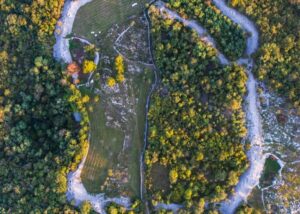
The Karst plateau is dotted with prehistoric hillforts – fortified settlements from the Bronze and Iron Age. Several hundred are known across Slovenia, many of them right here on the Karst. These were stone settlements enclosed by walls built without mortar, relying solely on knowledge, skill and a deep understanding of stone.
Debela Griža, near the village of Volčji Grad, is one of the largest and best-preserved hillforts in the area. The concentric dry-stone walls encircling the summit have been professionally conserved in recent years. Walking along these stone lines, more than three thousand years old, you sense how the Karst has always been a landscape of passage, defence and far-reaching views.
>>> starting point

Midday: Height and horizon
At 643 metres above sea level, Trstelj is one of the highest peaks of the Slovenian Karst. The summit can be reached in about one hour of moderate ascent from the village of Lipa, or you can drive almost to the mountain hut just below the top.
From the summit, the view opens in all directions – towards the Vipava Valley, inland Slovenia and, on clear days, as far as Grado and Savudrija. Here, the geographical character of the Karst becomes evident: a plateau that is both continental and maritime, open yet reserved.
The panorama is not dramatic at first glance. It is wide, expansive and calm – the kind of view that invites you to linger.
Vojščica
Late lunch: A village table
After a morning among stone and wind, it is time to sit down.
In the village of Vojščica, >>> a traditional inn known mostly to locals and returning guests serves classic Karst dishes prepared with seasonal ingredients and clarity of flavour. The terrace beneath the old mulberry tree is one of those places you remember long after the meal is over.
Open sky: Cerje
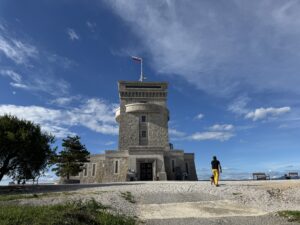
The Peace Monument on >>> Cerje rises above the edge of the plateau and offers one of the widest views in the region. It is dedicated to the defenders of Slovenian territory through different historical periods and stands at a symbolic point where geographical, cultural and historical boundaries meet.
From here, the proximity of the sea becomes tangible. And you understand just how much the Karst is a land between worlds.
And then – the sea
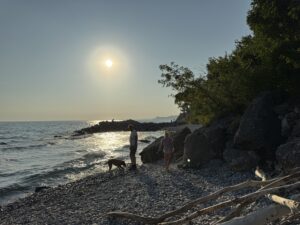
A short drive brings you to the coast. The transition is swift: from Karst stone to salt and wind over the water.
The beach beneath the steep cliffs below the village of Križ is called Liburnia. It requires about a ten-minute walk to reach, which keeps it quieter than most coastal spots. Pebbles, clear water and an open horizon make it ideal for a refreshing swim after a day on the plateau
>>> location
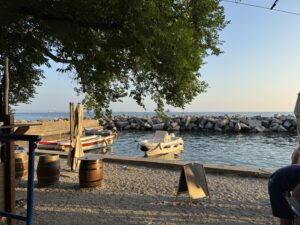
You may end the day in a >>> small seaside trattoria by the fishing boats. Fresh seafood, a simple setting, sunset light on the water.
In the evening, you return to the plateau.
The stone cools. The air softens.
And a day that began with morning coffee closes with a glass of wine in the borjač.